
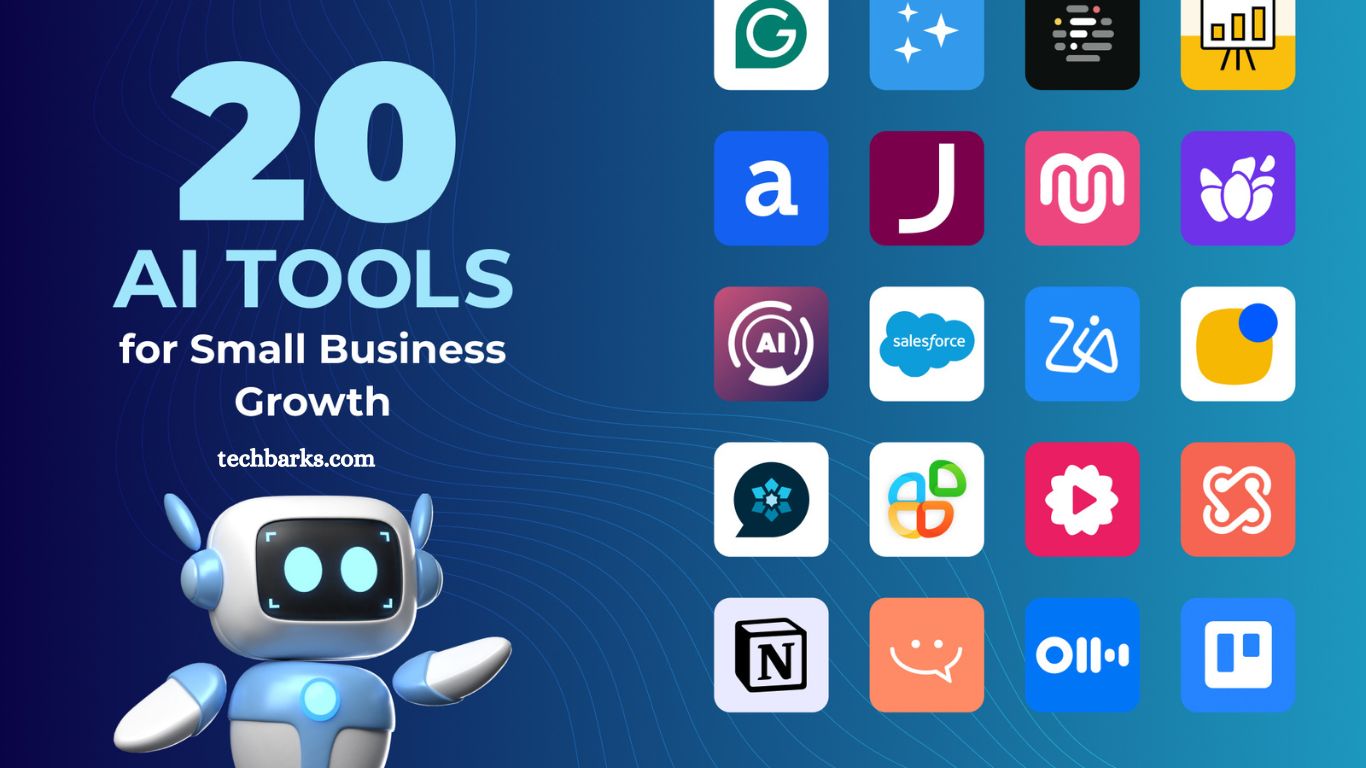
Modern small businesses face constant pressure to do more with less—less time, fewer resources, and tighter budgets. Artificial intelligence (AI) offers a powerful solution by automating repetitive tasks, improving decision-making, and unlocking new levels of efficiency.
Smart adoption of AI tools allows small teams to compete with larger organizations while maintaining agility and focus.
Why AI Matters for Small Businesses
Artificial intelligence is no longer limited to large corporations. Affordable, user-friendly tools now make it accessible for startups and small enterprises. AI reduces manual workload, minimizes human error, and accelerates operations across departments. Business owners can shift focus from routine tasks to strategy, growth, and customer relationships.
Read More: AI Transforming Digital Marketing: Trends, Benefits, and Future Impact
Key Benefits of AI Tools
AI tools deliver measurable advantages that directly impact productivity:
- Time Efficiency: Automates repetitive processes like data entry, scheduling, and reporting.
- Cost Reduction: Reduces the need for additional staff or outsourcing.
- Improved Accuracy: Minimizes errors in calculations, forecasting, and analysis.
- Better Decision-Making: Provides real-time data-driven insights.
- Enhanced Customer Experience: Offers faster and more personalized support.
Top AI Tools for Small Businesses
Careful selection of AI tools can transform operations without overwhelming your workflow. Below are some of the most effective categories and examples.
AI Writing and Content Creation Tools
Content plays a crucial role in digital marketing, and AI simplifies the creation process.
- ChatGPT: Generates blog posts, emails, product descriptions, and more.
- Jasper AI: Helps create marketing copy tailored for conversions.
- Copy.ai: Produces social media captions and ad content quickly.
These tools save hours of writing time while maintaining consistent quality.
AI-Powered Customer Support Tools
Customer service significantly impacts brand reputation. AI chatbots and support systems ensure instant responses.
- Zendesk AI: Automates ticket handling and customer queries.
- Tidio: Combines live chat with AI chatbot features.
- Intercom: Provides personalized communication with automation.
Quick responses improve customer satisfaction and free up staff for complex issues.
AI Tools for Marketing Automation
Marketing requires continuous effort, and AI helps streamline campaigns.
- HubSpot: Offers AI-driven marketing automation and analytics.
- Mailchimp: Optimizes email campaigns using predictive insights.
- Hootsuite: Schedules and analyzes social media performance.
Automation ensures consistency while maximizing reach and engagement.
AI Accounting and Finance Tools
Financial management becomes easier with AI-powered solutions.
- QuickBooks: Automates bookkeeping and expense tracking.
- Xero: Provides real-time financial insights.
- FreshBooks: Simplifies invoicing and payment tracking.
Accurate financial data enables smarter business decisions.
AI Tools for Project Management
Efficient project management keeps teams aligned and productive.
- Asana: Uses AI to prioritize tasks and workflows.
- Trello: Offers automation for task organization.
- Monday.com: Enhances team collaboration with smart tracking features.
Clear organization reduces delays and improves team performance.
AI Tools for Data Analysis
Data-driven decisions lead to better outcomes. AI tools analyze complex datasets quickly.
- Tableau: Visualizes business data effectively.
- Power BI: Provides actionable insights with AI integration.
- Zoho Analytics: Offers detailed reporting for small businesses.
Insightful analytics reveal trends and opportunities for growth.
How to Choose the Right AI Tools
Selecting the right tools requires careful evaluation of business needs. Consider the following factors:
- Ease of Use: Choose tools with simple interfaces and minimal learning curves.
- Scalability: Ensure tools can grow with your business.
- Integration: Look for compatibility with existing systems.
- Cost: Balance features with affordability.
- Support: Reliable customer support ensures smooth adoption.
Smart selection prevents wasted investment and maximizes productivity gains.
Best Practices for Implementing AI Tools
Successful implementation requires planning and strategy. Follow these steps to get the most out of AI tools:
- Identify Pain Points: Focus on areas where automation can save the most time.
- Start Small: Introduce one or two tools before expanding.
- Train Your Team: Ensure employees understand how to use new tools effectively.
- Monitor Performance: Track results and adjust strategies as needed.
- Stay Updated: AI evolves rapidly, so keep exploring new features and tools.
Gradual adoption ensures smooth integration without disrupting operations.
Common Challenges and Solutions
Despite its benefits, AI adoption comes with challenges. Understanding these issues helps overcome them effectively.
- Learning Curve: Provide training sessions and tutorials.
- Initial Costs: Start with free or low-cost tools before scaling.
- Data Privacy Concerns: Choose reputable platforms with strong security measures.
- Over-Reliance on Automation: Maintain human oversight for critical decisions.
Balanced usage ensures AI supports rather than replaces human expertise.
Future of AI in Small Business Productivity
AI technology continues to evolve, offering even greater opportunities. Advancements in machine learning, natural language processing, and automation will further simplify operations. Small businesses that adopt AI early gain a competitive advantage and position themselves for long-term success.
Frequently Asked Questions
What are the best AI tools for small businesses?
Top AI tools include ChatGPT for content creation, Zendesk AI for customer support, HubSpot for marketing automation, QuickBooks for accounting, and Asana for project management. Choosing tools depends on your business needs and budget.
How can AI improve productivity in small businesses?
AI automates repetitive tasks, provides data-driven insights, reduces errors, and accelerates decision-making, allowing small teams to focus on strategic and creative work.
Is AI expensive for small businesses?
Many AI tools offer affordable plans, free trials, or scalable pricing. Businesses can start small, using basic features before upgrading as needs grow, making AI accessible even on tight budgets.
Can AI replace employees in small businesses?
AI enhances productivity by handling repetitive or time-consuming tasks, but it cannot replace human creativity, strategic decision-making, or personal customer interactions.
How do I choose the right AI tool for my business?
Consider ease of use, integration with existing systems, scalability, cost, and support. Start with areas where AI can solve the most time-consuming problems.
Are AI tools safe for handling business data?
Reputable AI platforms use encryption and secure protocols. Ensure you select tools with strong privacy policies and compliance standards to protect sensitive information.
What is the future of AI for small businesses?
AI adoption will continue to grow, with smarter automation, predictive analytics, and advanced customer engagement tools. Early adopters gain a competitive edge and improved operational efficiency.
Conclusion
AI tools have become essential for small businesses seeking to boost productivity, reduce costs, and stay competitive. By automating repetitive tasks, providing actionable insights, and improving customer interactions, AI allows teams to focus on strategy, innovation, and growth. Careful selection of tools, gradual implementation, and ongoing monitoring ensure maximum efficiency without overwhelming your operations.
