
The phrase circular economy conjures images of recycling bins and reused bottles, but its real engine is information. You cannot recover, repair or reuse what you cannot see, and for most of industrial history we simply lost track of materials the moment a product left the factory. A new layer of digital infrastructure is changing that, giving physical objects a data trail that lasts their entire life and beyond.
The internet of things meets the waste stream
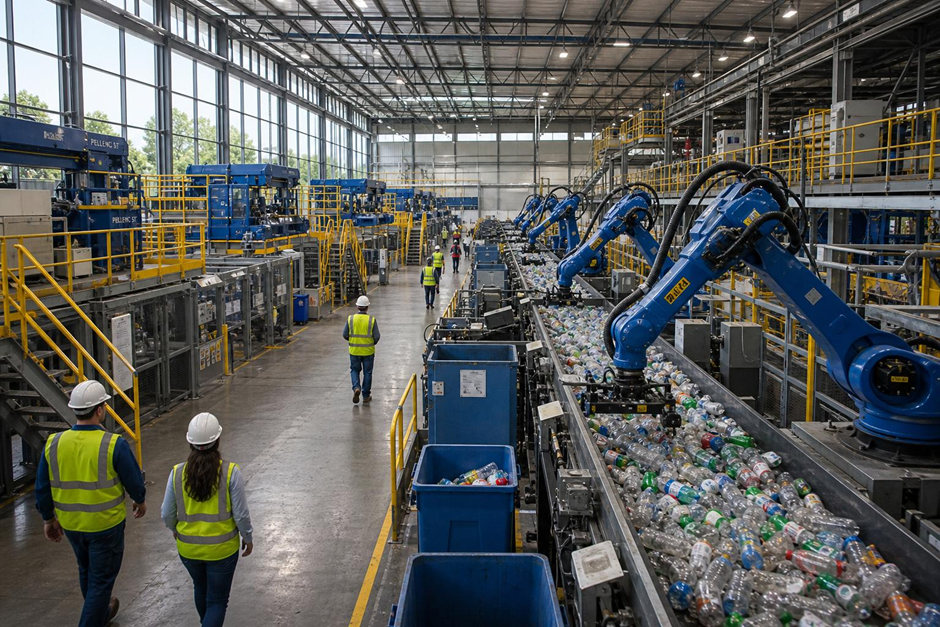
Connected sensors are quietly spreading through the materials economy. Smart bins report how full they are so collection trucks are dispatched only when needed, cutting fuel and emissions. Weight and composition sensors on sorting lines feed live dashboards that show exactly what is flowing through a facility. RFID and QR tags let a component announce what it is made of and who made it. Each signal is small, but together they convert a blind, reactive system into one that can be measured, predicted and optimised.
Digital product passports
The most ambitious idea is the digital product passport. Under the European Union’s Ecodesign for Sustainable Products Regulation, a growing range of goods will carry a machine-readable record of their composition, origin, repairability and recycling instructions. Scan a code and you learn which polymers a casing contains, whether a battery can be replaced and how the item should be dismantled at end of life.
- Recyclers gain instant, accurate input data instead of guessing.
- Repairers find the parts and instructions they need to extend a product’s life.
- Consumers and regulators can verify sustainability claims rather than trust them.
Barriers still to clear
The vision is compelling, but the plumbing is hard. Standards are the first hurdle: a digital product passport is only useful if a recycler in one country can read a passport written by a manufacturer in another, which demands shared data formats and identifiers that the whole market agrees on. Data ownership is the second. A passport reveals a great deal about how a product is made, and companies are understandably cautious about exposing commercial detail, so access has to be layered, giving regulators, recyclers and consumers each the slice they need and no more. Security is the third. Connected bins, tags and sensors expand the attack surface of the waste system, and a traceability record is worthless if it can be quietly forged. None of these problems is unprecedented; the wider technology industry has spent decades solving versions of them in payments, logistics and healthcare. What is new is applying that hard-won maturity to materials, an area long starved of reliable data.
Trust, traceability and forecasting
For this data to be useful it must be trustworthy. Distributed ledgers and tamper-evident records let multiple parties in a supply chain share a single source of truth without handing control to any one of them, making it far harder to greenwash or lose track of a material. On top of that sits analytics: machine-learning models now forecast how much recycled material a region will produce and where demand will land, helping processors plan capacity and helping manufacturers commit to recycled content with confidence. The same models can match supply with demand in near real time, turning fragmented secondary materials into something closer to a liquid commodity market. Better price signals then encourage collectors to gather the harder, lower-value fractions that today are simply discarded, pulling more material back into circulation.
The lesson is that the circular economy is as much a software problem as a hardware one. Sensors, passports and shared ledgers turn sustainability from an aspiration into something you can audit. To see how these threads come together across recycling in Europe, European Recycling follows the technologies and policies driving the transition.
