
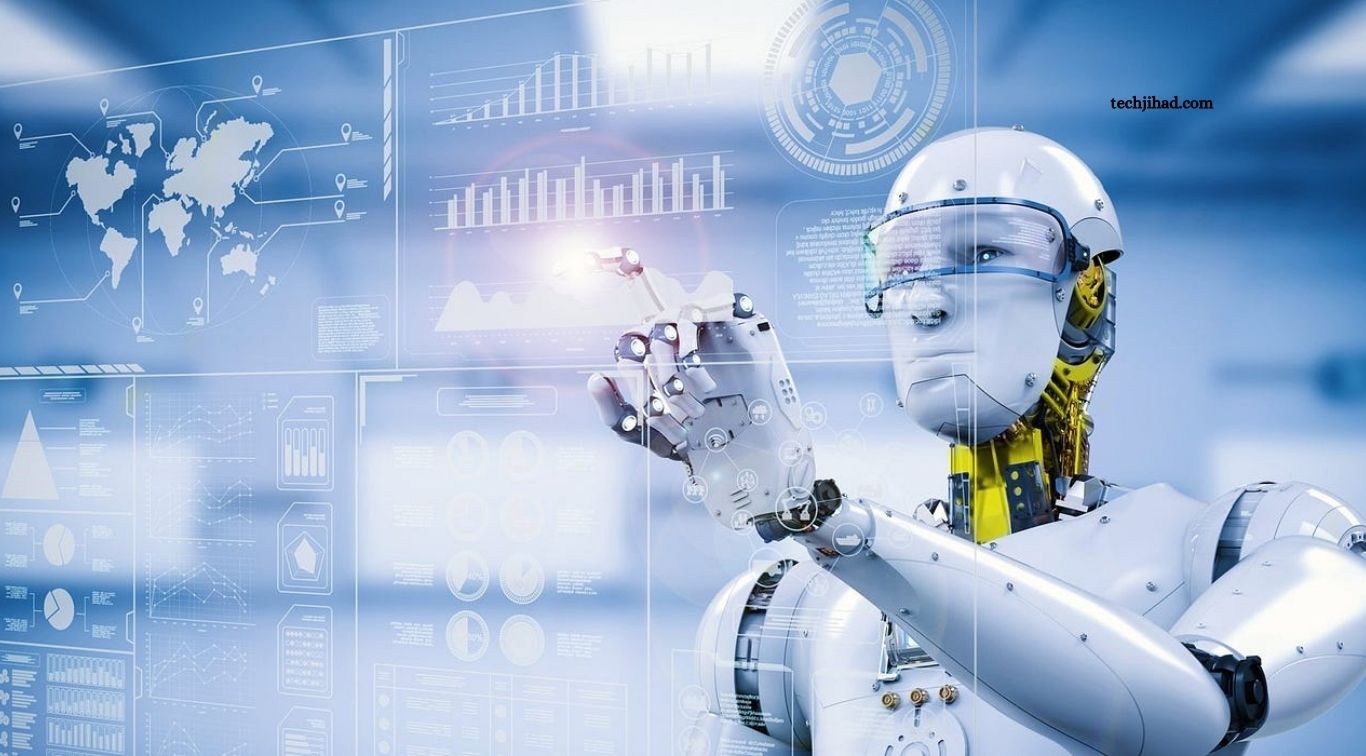
Technology is changing the way people live, work, communicate, and solve problems. From artificial intelligence and advanced robotics to clean energy and immersive digital experiences, new technology ideas are opening doors to possibilities that once seemed impossible. These innovations are helping businesses improve efficiency, supporting scientific discoveries, transforming healthcare, and creating new ways for people to interact with the world around them. As digital tools become more advanced, technology is increasingly influencing nearly every part of modern life.
Understanding the latest technology ideas can help individuals, businesses, and communities prepare for the opportunities and challenges ahead. Some innovations are already being used in everyday applications, while others are still developing and require further research before becoming widely available. The most promising technologies are not simply about making devices faster or more powerful; they aim to solve real-world problems, improve quality of life, and create more sustainable systems. Here are ten new technology ideas that are helping shape the future.
Read More: Smart Technology Trends Changing How We Live and Work
Artificial Intelligence and Generative AI
Artificial intelligence (AI) is one of the most influential technology developments of the modern era. AI systems can analyze large amounts of information, recognize patterns, generate content, assist with decision-making, and automate tasks that traditionally required human effort. Generative AI has expanded these capabilities by enabling tools to produce text, images, audio, video, and computer code from natural-language instructions. These applications are changing how people approach creative work, education, customer support, software development, and business operations.
The future of AI will likely involve more specialized assistants, improved reasoning capabilities, and systems that work alongside people in practical environments. Businesses may use AI to identify inefficiencies, personalize customer experiences, and accelerate research, while healthcare professionals may use it to support administrative work and analyze medical information. However, responsible development remains essential. Issues involving privacy, misinformation, bias, intellectual property, and human oversight must be addressed to ensure AI provides useful benefits without creating unnecessary risks.
Humanoid Robots and Intelligent Automation
Robotics is advancing beyond traditional industrial machines toward systems capable of performing a wider variety of physical tasks. Modern robots can combine cameras, sensors, artificial intelligence, and sophisticated movement controls to navigate environments, handle objects, and respond to changing conditions. Humanoid robots are especially interesting because their human-like shape may allow them to operate in spaces designed for people, although their usefulness depends on reliability, safety, cost, and the complexity of the task.
In the coming years, intelligent robots could support warehouse operations, manufacturing, agriculture, healthcare facilities, and dangerous inspection work. Robots may help move heavy materials, perform repetitive activities, or assist workers in environments where human exposure to risk should be minimized. Household and service robots may also become more capable as their navigation and object-handling abilities improve. Nevertheless, widespread adoption will require dependable performance, practical maintenance, clear safety standards, and careful planning for how automation affects jobs and workforce training.
Quantum Computing
Quantum computing is a developing field that uses principles of quantum physics to process information in ways that differ from conventional computers. Traditional computers represent information using bits, while quantum computers use quantum bits, or qubits, which can exhibit properties such as superposition and entanglement. These characteristics may allow certain specialized calculations to be performed more efficiently than they can on classical systems, although quantum computers are difficult to build, control, and scale.
Potential applications include studying molecular behavior, developing new materials, optimizing complex systems, and investigating problems in chemistry and physics. For example, researchers hope quantum computers could eventually help simulate chemical reactions that are difficult to model accurately using conventional computing alone. However, many practical applications remain experimental, and quantum computers are not expected to replace ordinary computers for everyday tasks. Progress will depend on improving qubit stability, reducing errors, and developing useful algorithms for problems where quantum methods offer a genuine advantage.
Extended Reality and Spatial Computing
Extended reality, which includes virtual reality (VR), augmented reality (AR), and mixed reality (MR), is creating new ways to interact with digital information. Virtual reality places users inside computer-generated environments, while augmented reality adds digital elements to views of the physical world. Mixed reality can combine digital objects with real surroundings in ways that allow more interactive experiences. Improvements in displays, motion tracking, wearable devices, and spatial computing are making these technologies increasingly useful beyond entertainment.
In education, students may explore simulated environments to understand difficult concepts or practice procedures without real-world risks. Businesses can use immersive tools for product visualization, remote collaboration, equipment training, and architectural design. Healthcare professionals may also use simulations to rehearse selected procedures or explain complex information to patients. The future of extended reality will depend on making devices more comfortable, affordable, and accessible while improving battery life, software quality, and privacy protections. Successful applications will need to solve practical problems rather than rely on novelty alone.
Clean Energy and Next-Generation Battery Technology
Clean energy technologies are becoming increasingly important as countries and businesses look for ways to reduce emissions and strengthen energy security. Solar panels, wind turbines, advanced power electronics, and smarter electricity networks are helping expand the use of renewable energy. One major challenge is that sunlight and wind are not continuously available, creating a need for effective energy storage and flexible systems that can balance electricity supply with demand.
Next-generation batteries are an important part of this transition. Researchers are investigating improved lithium-ion designs, solid-state batteries, sodium-ion systems, and other approaches that could offer different combinations of cost, safety, durability, and energy density. Better storage could support electric vehicles, homes, commercial buildings, and large electricity networks. Progress will depend not only on battery chemistry but also on manufacturing capacity, recycling, mineral supply chains, and charging infrastructure. No single battery design will suit every application, so future energy systems will likely combine several technologies according to their strengths.
Biotechnology and Personalized Medicine
Biotechnology is using advances in biology, computing, and engineering to improve how researchers understand diseases and develop treatments. Genome sequencing, gene-editing techniques, advanced diagnostics, and computational biology are helping scientists investigate conditions at increasingly detailed levels. These tools may support more targeted treatments by revealing how genetic differences, biological processes, and environmental factors influence an individual’s health.
Personalized medicine aims to select prevention strategies or treatments based on relevant information about each patient rather than relying entirely on a one-size-fits-all approach. In some areas, genetic testing can already help guide treatment decisions, while other applications remain under investigation. Future developments may improve early disease detection, help identify promising drug candidates, and support more precise therapies. However, biological complexity means that personalized medicine is not suitable for every condition or patient. Clinical evidence, affordability, informed consent, privacy, and equitable access will remain essential as these technologies develop.
The Internet of Things and Smart Environments
The Internet of Things (IoT) connects physical devices to digital networks so they can collect information, communicate, and respond to changing conditions. Examples include smart thermostats, connected appliances, industrial sensors, wearable devices, and monitoring equipment used in buildings and transport systems. When these devices share useful information, they can help people understand how resources are being used and identify problems before they become more serious.
Smart homes may use connected systems to adjust lighting, manage temperature, detect leaks, or improve security according to user preferences. In industry, IoT sensors can monitor machinery, track inventory, and support predictive maintenance. Cities may also use connected infrastructure to manage traffic, monitor environmental conditions, or improve the operation of public services. As more devices become connected, cybersecurity and data privacy will become even more important. Manufacturers and organizations must provide reliable updates, secure communication, clear privacy controls, and support for devices throughout their useful lives.
Autonomous Vehicles and Advanced Transportation
Autonomous vehicle technology aims to help vehicles perceive their surroundings, make driving decisions, and perform some or all driving tasks without continuous human control. These systems may use cameras, radar, lidar, digital maps, and artificial intelligence to detect obstacles, interpret road conditions, and plan movements. Driver-assistance features are already available in many vehicles, but they are not the same as fully autonomous driving. The level of automation and the conditions under which a vehicle can operate safely vary considerably between systems.
Future transportation may combine advanced driver assistance, autonomous shuttles in controlled environments, automated freight operations, and smarter traffic-management systems. Potential benefits include improved transport efficiency and greater mobility for some people who cannot drive independently. Yet challenges remain, including difficult weather conditions, unpredictable road users, software reliability, cybersecurity, legal responsibility, and public trust. Autonomous systems must be tested thoroughly and used only within their approved operating conditions. Their long-term success will depend on demonstrated safety, appropriate regulation, dependable infrastructure, and clear communication about their limitations.
Digital Twins and Real-Time Simulation
A digital twin is a digital representation of a physical object, process, or system that can be updated with information from its real-world counterpart. Unlike a basic static model, a digital twin may incorporate sensor readings, operational data, simulations, and predictive analytics. This allows engineers and organizations to study how a system behaves, explore possible changes, and identify potential problems before making expensive physical adjustments.
Digital twins can be used in manufacturing, construction, energy systems, transportation, and building management. A factory operator might use one to understand equipment performance, while an engineering team could test different operating conditions before modifying a production process. In urban planning, connected models may help researchers examine how proposed changes could affect traffic, infrastructure, or energy demand. The quality of a digital twin depends on the accuracy of its underlying data and the assumptions built into its models. Maintaining reliable information and protecting sensitive operational data are therefore critical to producing useful results.
Cybersecurity and Privacy-Enhancing Technologies
As more activities move online, cybersecurity is becoming a central part of technological progress. Individuals, companies, hospitals, financial institutions, and public services all depend on digital systems that can be targets for fraud, data theft, and disruptive attacks. New security approaches are being developed to identify threats earlier, verify users more reliably, protect sensitive information, and reduce the damage caused by compromised accounts or devices.
Emerging approaches include AI-assisted threat detection, stronger identity verification, confidential computing, privacy-preserving data analysis, and cryptographic methods designed to protect information during processing or sharing. Organizations are also preparing for the potential impact of quantum computing on some existing encryption methods by investigating and adopting post-quantum cryptography. No single security product can eliminate every risk. Effective protection requires layered defenses, regular software updates, secure backups, staff training, careful data handling, and clear incident-response plans. Privacy-enhancing technologies may also help organizations use valuable data while limiting unnecessary exposure of personal information.
How These New Technologies Will Change Everyday Life
The most significant changes will often come from combining technologies rather than using each one in isolation. For example, AI can analyze information collected by IoT sensors, while digital twins can help engineers test improvements to the systems those sensors monitor. Clean energy and better batteries can support electric transportation, and advances in cybersecurity can help protect the connected infrastructure on which these services depend. When designed to work together, different innovations can produce benefits that are greater than those of individual tools.
These changes will also affect education, employment, healthcare, communication, and the way businesses deliver services. Some tasks may become automated, while new roles will emerge in areas such as technology maintenance, data analysis, safety testing, and digital infrastructure. People may need to update their skills more frequently as tools and working methods evolve. At the same time, societies will need to consider affordability, accessibility, environmental costs, and the risk that advanced technologies could widen existing inequalities. The best outcomes will depend on making innovation useful and inclusive rather than measuring progress only by technical performance.
Challenges and Ethical Considerations in Future Technology
Although emerging technologies offer many opportunities, they can also create serious challenges when developed or deployed without sufficient care. AI systems may produce inaccurate results, connected devices can expose personal data, and automated systems may behave unpredictably in unfamiliar situations. New medical technologies raise questions about consent and fairness, while advanced computing and energy infrastructure can require substantial investment and resources. Understanding these limitations is essential for evaluating whether an innovation is ready for real-world use.
Responsible technology development requires testing, transparent communication, appropriate regulation, and meaningful human oversight. Organizations should evaluate safety, privacy, environmental impact, accessibility, and potential unintended consequences before introducing systems at scale. Governments, researchers, businesses, and communities all have a role in deciding how emerging technologies should be used. By identifying risks early and learning from real-world experience, society can encourage useful innovation while reducing avoidable harm and ensuring that technological progress serves human needs.
Frequently Asked Questions
What are the most promising new technology ideas?
Artificial intelligence, clean energy, biotechnology, advanced robotics, and quantum computing are among the promising areas of innovation.
How is artificial intelligence shaping the future?
AI helps automate tasks, analyze information, generate content, and support decision-making across many industries.
Will robots replace human workers?
Robots may automate some tasks, but they can also support workers and create demand for new skills and roles.
What is the purpose of quantum computing?
Quantum computing aims to solve certain specialized problems more efficiently than conventional computers can.
How can new technologies support sustainability?
Renewable energy, improved batteries, smart grids, and efficient monitoring systems can help reduce resource waste and emissions.
Why is cybersecurity important for future technology?
Cybersecurity protects digital systems, personal information, and essential services from unauthorized access and attacks.
Conclusion
These ten new technology ideas demonstrate how innovation is reshaping industries and opening possibilities for the future. Artificial intelligence, robotics, quantum computing, extended reality, clean energy, biotechnology, connected devices, autonomous transportation, digital twins, and advanced cybersecurity each offer distinct opportunities to solve problems and improve existing systems. Some are already influencing daily life, while others need further research, testing, and investment before their full potential can be realized. The future of technology will depend on more than creating powerful tools.
