
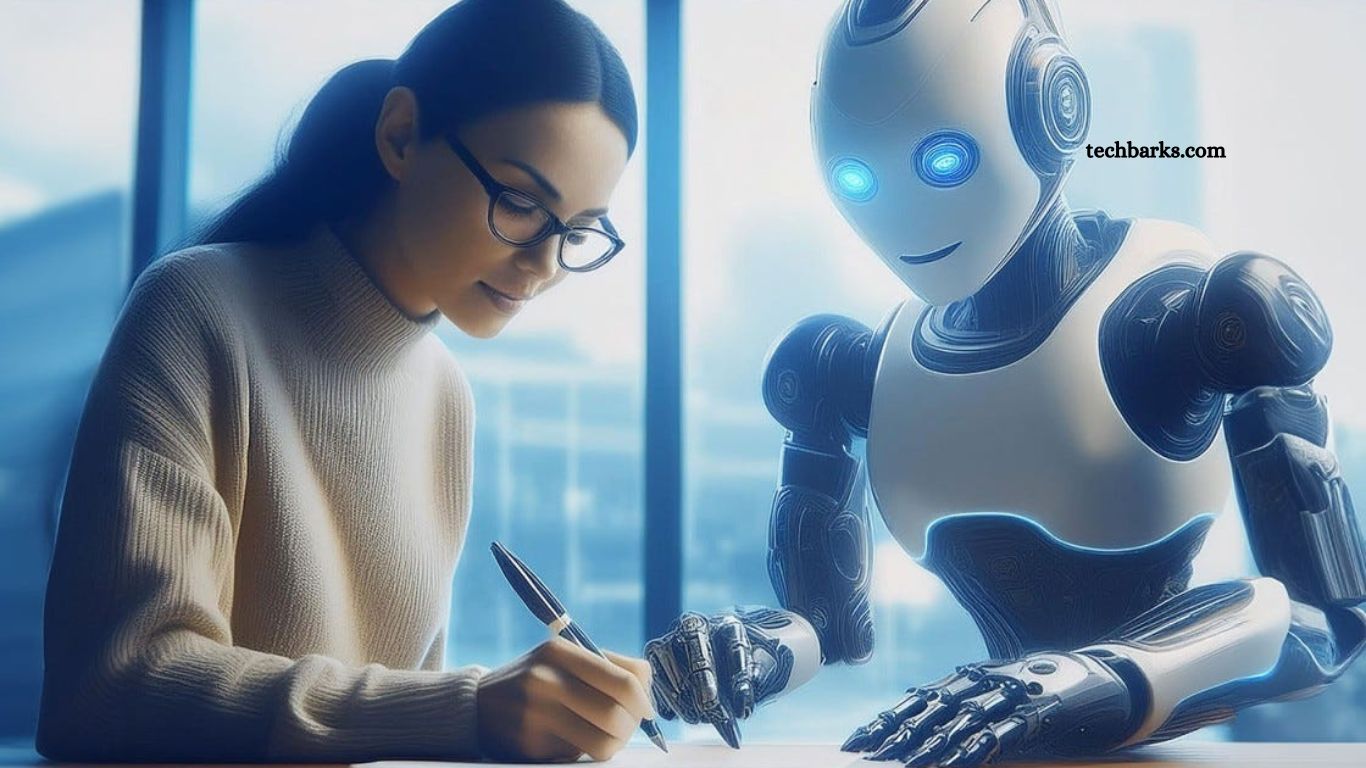
The rise of artificial intelligence is reshaping workplaces globally, challenging traditional roles and creating new opportunities. Understanding the balance between AI efficiency and human creativity is essential for businesses, employees, and policymakers. While AI excels at data analysis, automation, and repetitive tasks,
Humans bring adaptability, emotional intelligence, and critical thinking. Exploring how AI and humans complement each other provides valuable insights into the future of work, career planning, and strategies for sustainable growth in a rapidly evolving technological landscape.
Read More: How to Use AI for SEO Optimization
AI Capabilities Shaping the Workforce
AI excels in processing large datasets, identifying patterns, and automating repetitive tasks. Industries such as finance, healthcare, and manufacturing already rely on AI for tasks like predictive analysis, quality control, and customer support. AI can work tirelessly, reduce human error, and enhance decision-making speed.
However, AI has limitations. While it can analyze data and generate insights, creativity, emotional intelligence, and complex problem-solving remain areas where humans outperform machines. AI cannot replicate nuanced judgment, cultural awareness, or ethical decision-making fully.
Human Strengths That Remain Irreplaceable
Humans possess adaptability and empathy that AI cannot replicate. Jobs that involve interpersonal communication, strategic planning, leadership, and creative innovation remain primarily human-driven. Roles requiring ethical reasoning, negotiation, and contextual judgment also favor human expertise.
Humans can integrate diverse perspectives, think critically, and navigate ambiguous situations—skills essential in dynamic industries. The combination of technical knowledge and emotional intelligence allows humans to add value beyond what AI can deliver independently.
Collaboration Between AI and Humans
The future of work is likely hybrid, with humans and AI collaborating to achieve greater efficiency. AI can handle data-heavy, repetitive, and time-consuming tasks, freeing humans to focus on strategic and creative work. This collaboration allows employees to enhance productivity, make informed decisions, and foster innovation.
Organizations that adopt AI-human collaboration gain competitive advantages. Training employees to work alongside AI and emphasizing skill development becomes critical. Upskilling in areas like data interpretation, AI management, and creative problem-solving prepares the workforce for evolving demands.
Preparing for the Future of Work
Adapting to AI integration requires proactive strategies. Businesses should invest in technology while nurturing human talent. Policymakers need to focus on education, workforce reskilling, and ethical AI frameworks.
Career planning should emphasize skills resistant to automation, such as leadership, creativity, and social intelligence. Understanding AI’s strengths and human uniqueness ensures sustainable growth and workforce resilience.
Frequently Asked Questions
What is the main difference between AI and human work?
AI excels at data processing and repetitive tasks, while humans offer creativity, critical thinking, and emotional intelligence.
Can AI replace human jobs completely?
No, AI can automate specific tasks, but roles requiring judgment, empathy, and creativity remain human-driven.
How can humans and AI work together?
AI handles repetitive or data-heavy work, freeing humans to focus on strategic, creative, and interpersonal tasks.
Which industries benefit most from AI integration?
Finance, healthcare, manufacturing, logistics, and customer service see the most significant impact from AI adoption.
What skills should humans develop for the AI-driven future?
Skills like creativity, leadership, problem-solving, and emotional intelligence remain essential and resistant to automation.
How should organizations prepare for AI-human collaboration?
Invest in AI tools, train employees, focus on upskilling, and create processes that combine human insight with AI efficiency.
Conclusion
AI will transform work environments, but human skills remain indispensable. Success depends on collaboration, continuous learning, and strategic application of AI. By combining human ingenuity with AI efficiency, businesses and individuals can navigate future challenges and opportunities effectively.
