
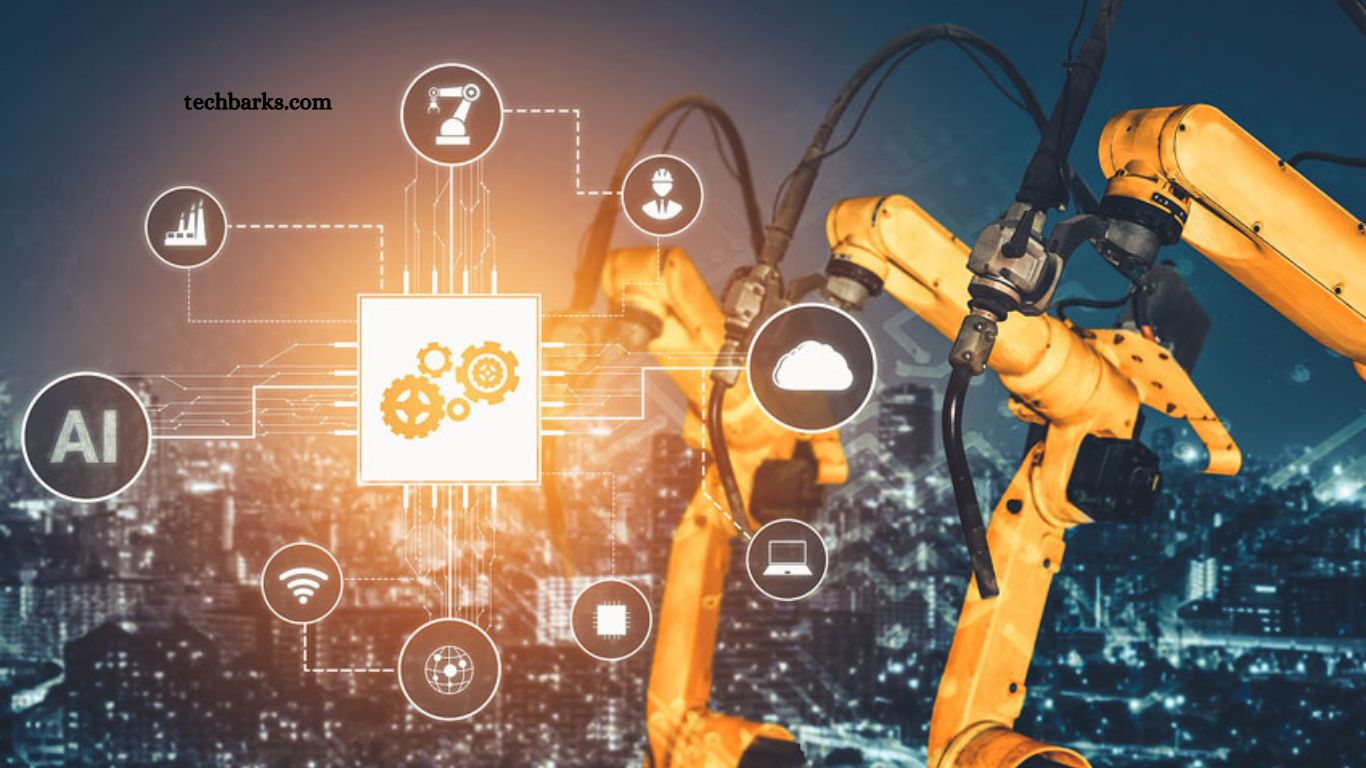
Artificial Intelligence (AI) reshapes the technology industry at a rapid pace. From software development to cloud computing, AI introduces automation, intelligence, and efficiency into nearly every digital process. Companies adopt AI to reduce costs, improve accuracy, and accelerate innovation cycles.
The tech industry no longer relies only on manual coding, traditional data analysis, or static systems. Instead, AI-powered systems learn, adapt, and evolve continuously, creating smarter digital ecosystems.
Read More: Best Chatbot Tools for Customer Support
AI in Software Development
AI significantly transforms how developers build applications and systems.
Automated Code Generation
Modern AI tools assist developers by generating code snippets, debugging errors, and suggesting optimizations. This reduces development time and improves code quality.
Smarter Development Tools
Integrated development environments now include AI-based assistants that predict code, detect bugs early, and recommend best practices. This allows developers to focus on complex problem-solving instead of repetitive tasks.
Low-Code and No-Code Platforms
AI strengthens low-code platforms, enabling non-technical users to build applications. This expands software creation beyond professional developers and accelerates digital transformation across industries.
AI and Cloud Computing Evolution
Cloud computing integrates deeply with AI technologies.
Intelligent Resource Management
AI optimizes cloud infrastructure by allocating resources dynamically based on usage patterns. This improves performance and reduces operational costs.
Predictive Scaling
AI systems predict traffic demand and automatically scale cloud services. Businesses maintain performance during peak loads without manual intervention.
Enhanced Cloud Security
AI detects unusual patterns in cloud environments, helping prevent breaches and unauthorized access.
AI in Cybersecurity
Cybersecurity stands as one of the most critical areas influenced by AI.
Threat Detection in Real Time
AI systems analyze network traffic and identify potential threats instantly. This reduces response time to cyberattacks.
Behavioral Analysis
AI learns user behavior patterns and flags anomalies that may indicate malicious activity.
Automated Response Systems
Advanced security platforms now use AI to isolate threats automatically, limiting damage before human intervention occurs.
AI in Data Analytics and Big Data
Data has become the backbone of the tech industry, and AI unlocks its full potential.
Faster Data Processing
AI processes massive datasets in seconds, delivering insights that would take humans days or weeks.
Predictive Analytics
Businesses use AI to forecast market trends, customer behavior, and operational risks with high accuracy.
Data-Driven Decision Making
Organizations rely on AI-generated insights to make strategic decisions, improving efficiency and profitability.
AI in Product Development and Innovation
AI accelerates innovation cycles across the tech industry.
Smart Product Design
AI simulates user behavior and product performance before development, reducing risks and development costs.
Personalization at Scale
Tech companies use AI to create personalized user experiences in apps, websites, and digital services.
Faster Time-to-Market
Automation and AI-driven testing reduce production delays, allowing companies to launch products faster.
AI in DevOps and IT Operations
AI enhances DevOps processes and IT management.
Continuous Monitoring
AI systems monitor infrastructure performance in real time, detecting issues before they escalate.
Predictive Maintenance
AI predicts system failures and schedules maintenance proactively, reducing downtime.
Workflow Automation
Routine tasks such as deployment, testing, and monitoring become automated, improving efficiency.
Impact on Tech Jobs and Workforce
AI changes job roles within the tech industry.
Job Transformation
Rather than replacing humans completely, AI shifts job responsibilities toward strategic and creative tasks.
Demand for AI Skills
Skills in machine learning, data science, and AI engineering become highly valuable.
Collaboration Between Humans and AI
Modern workplaces emphasize human-AI collaboration, where AI handles repetitive tasks, and humans focus on innovation and decision-making.
Challenges of AI Adoption in Tech
Despite benefits, AI introduces challenges.
Data Privacy Concerns
AI systems require large datasets, raising concerns about user privacy and data protection.
High Implementation Costs
Advanced AI systems require significant investment in infrastructure and talent.
Ethical Considerations
Bias in AI models and decision-making transparency remain critical issues.
Future of AI in the Tech Industry
AI continues to evolve and reshape the tech landscape.
Autonomous Systems
Future systems will operate with minimal human input, improving efficiency across industries.
Advanced Human-AI Collaboration
AI will act as a co-pilot in nearly every technical workflow, enhancing productivity.
Expansion of AI Ecosystems
AI integration will extend across all digital platforms, from mobile apps to enterprise systems.
Frequently Asked Questions
What is the role of AI in the tech industry?
AI improves automation, enhances decision-making, and increases efficiency across software, cloud, and data systems.
How does AI help software development?
AI assists in coding, debugging, and testing, and speeds up the overall development process.
Is AI replacing tech jobs?
AI is not fully replacing jobs; it is transforming roles and increasing demand for advanced technical skills.
How does AI improve cybersecurity?
AI detects threats in real time, identifies unusual behavior, and helps prevent cyber attacks.
Why is AI important in data analytics?
AI processes large datasets quickly and provides accurate predictions for better decision-making.
What is the future of AI in technology?
AI will become more advanced, enabling automation, smarter systems, and deeper human-AI collaboration.
Conclusion
Artificial Intelligence transforms the tech industry by improving automation, enhancing cybersecurity, accelerating development, and driving innovation. Businesses that adopt AI gain a competitive advantage through efficiency, scalability, and smarter decision-making. As AI continues to evolve,
