
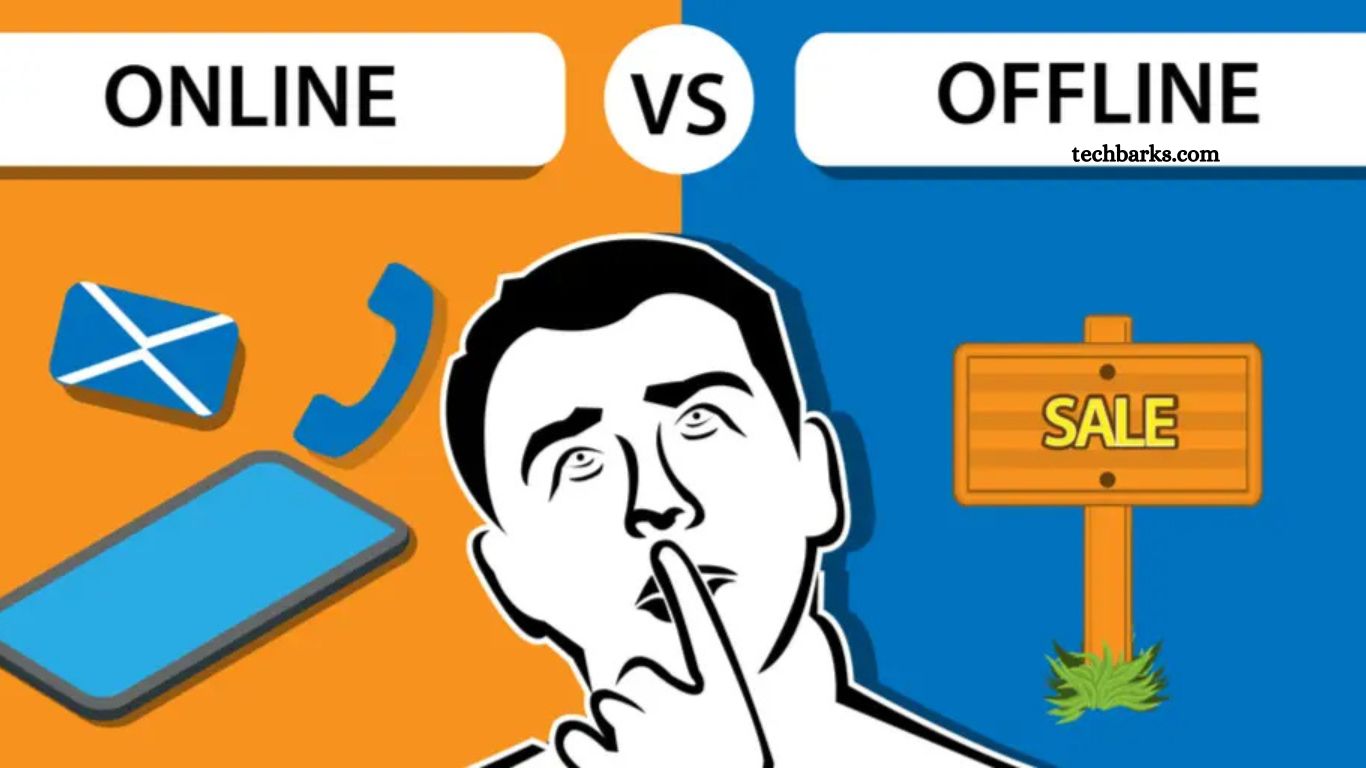
Choosing between online business and offline business remains one of the most critical decisions for modern entrepreneurs. Each model offers distinct advantages, challenges, and growth opportunities.
Understanding key differences helps business owners align strategy with goals, resources, and the target market. This article explores both models in depth, comparing costs, scalability, customer experience, and long-term sustainability.
Read More: How to Build a Profitable Startup
What Is an Online Business?
An online business operates primarily through internet platforms. Products or services reach customers via websites, social media, or digital marketplaces. Examples include e-commerce stores, digital services, online coaching, and SaaS platforms.
Key Advantages
- Lower startup cost: No physical space required, reducing rent and utility expenses
- Global reach: Access customers across different regions without geographic limits
- Scalability: Growth is easier through automation and digital marketing
- Flexible operations: Manage business from any location
Challenges
- High competition in the digital space
- Dependence on technology and internet access
- Trust-building requires strong branding and reviews
What Is an Offline Business?
Offline businesses operate through physical presence, such as retail stores, restaurants, or service centers. Customer interaction happens face-to-face, creating direct engagement.
Key Advantages
- Personal interaction: Builds stronger customer relationships
- Immediate trust: Physical presence increases credibility
- Tangible experience: Customers can see, touch, or test products
Challenges
- Higher startup and operational costs
- Limited geographic reach
- Expansion requires significant investment
Cost Comparison: An online
An online business typically requires a lower initial investment. Expenses focus on website development, marketing, and logistics.
Offline business involves rent, utilities, staff salaries, and inventory storage. For startups with limited capital, the online model often provides an easier entry point.
Scalability and Growth
Online businesses scale faster due to automation tools, digital advertising, and global accessibility. Adding new products or expanding into new markets requires minimal structural changes.
Offline businesses grow steadily but require physical expansion, new locations, and higher operational complexity.
Customer Experience
Offline businesses excel in personal interaction. Customers value human connection, immediate service, and physical product evaluation.
Online businesses rely on user experience design, fast delivery, and responsive customer support. Reviews, testimonials, and branding play a major role in building trust.
Marketing Approach
Online businesses use SEO, social media marketing, email campaigns, and paid ads to attract customers. Offline businesses depend on local advertising, word-of-mouth, and physical visibility,y such as a storefront location.
Risk Factors
Online businesses face risks like cybersecurity threats, platform dependency, and algorithm changes. Offline businesses deal with location dependency, higher fixed costs, and economic fluctuations affecting foot traffic.
Which Is Better?
No universal answer exists. The best choice depends on business goals, budget, and target audience.
- Choose an online business if the goal includes scalability, flexibility, and lower startupcostst.s
- Choose an offline business if your focus lies on personal interaction, local presence, and hands-on experience.
Many successful companies now adopt a hybrid model, combining online convenience with offline presence. This approach maximizes reach while maintaining strong customer relationships.
Frequently Asked Questions
Which business model requires less investment?
An online business requires lower investment due to no physical space or high operational costs.
Which business grows faster?
Online business grows faster because of global reach and scalability options.
Is offline business still profitable?
Yes, offline business remains profitable, especially in local markets with strong customer relationships.
Which model builds better customer trust?
Offline business builds trust faster through direct interaction, while online business relies on reviews and branding.
Can I combine both business models?
Yes, the hybrid model combines online reach with offline presence for better results.
Which is better for beginners?
Online business suits beginners due to low risk, flexibility, and an easy startup process.
Conclusion
The online vs. offline business debate continues evolving as technology advances. Each model offers unique strengths. Smart entrepreneurs evaluate market needs, resources, and long-term vision before making a decision.
