
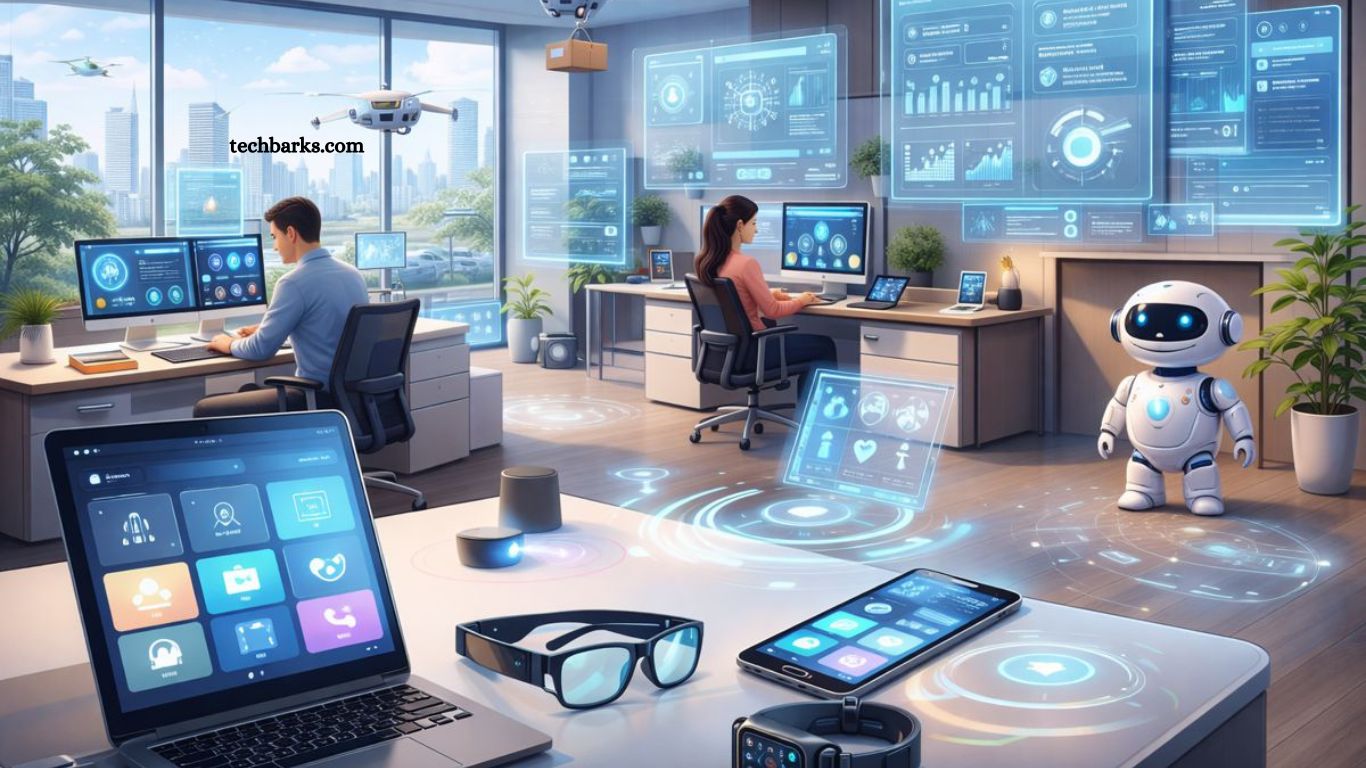
Technology continues to transform daily life, workplaces, healthcare, education, transportation, and environmental protection. Smart technology creates faster processes, improves efficiency, and helps people make better decisions through automation and intelligent systems.
As innovation accelerates, smart solutions shape a future focused on sustainability, convenience, and improved quality of life. This article explores practical smart technology ideas for a better future, highlighting emerging trends, real-world applications, and future possibilities.
Read More: New Technology Developments That Will Surprise You
What Is Smart Technology?
Smart technology combines artificial intelligence (AI), the Internet of Things (IoT), machine learning, cloud computing, sensors, and automation to perform tasks with minimal human intervention. These technologies collect data, analyze information, and respond intelligently to changing conditions.
Smart systems improve productivity, reduce costs, enhance safety, and create personalized experiences across many industries.
Benefits of Smart Technology
Smart technology delivers numerous advantages for individuals, businesses, and governments.
Increased Efficiency
Automation handles repetitive tasks quickly and accurately, allowing people to focus on creative and strategic work.
Better Decision-Making
Advanced analytics processes massive amounts of information, providing valuable insights for smarter decisions.
Improved Safety
Smart monitoring systems detect potential risks before problems become serious, protecting people, property, and infrastructure.
Cost Savings
Energy-efficient devices, predictive maintenance, and automated operations reduce unnecessary expenses.
Environmental Sustainability
Modern technology supports renewable energy, waste reduction, and efficient resource management, helping protect the planet.
Smart Technology Ideas for a Better Future
Smart Homes
Smart homes improve comfort, convenience, and security through connected devices.
Popular features include:
- Smart lighting
- Voice-controlled assistants
- Smart thermostats
- Automated security cameras
- Smart door locks
- Energy monitoring systems
These systems reduce electricity consumption while providing greater control over household operations.
Artificial Intelligence in Healthcare
Healthcare continues experiencing remarkable improvements through AI-powered solutions.
Applications include:
- Early disease detection
- Medical imaging analysis
- Personalized treatment plans
- Virtual health assistants
- Remote patient monitoring
- Drug discovery
AI helps doctors diagnose illnesses faster while improving patient outcomes.
Smart Cities
Smart cities use technology to improve public services and urban living.
Key innovations include:
- Intelligent traffic management
- Smart street lighting
- Waste management systems
- Public safety monitoring
- Air quality sensors
- Water conservation technologies
These improvements reduce congestion, pollution, and energy consumption.
Autonomous Vehicles
Self-driving vehicles represent one of the most exciting developments in transportation.
Future benefits include:
- Fewer traffic accidents
- Lower fuel consumption
- Reduced traffic congestion
- Improved accessibility
- Faster logistics
- Enhanced road safety
Autonomous transportation could completely transform travel and delivery services.
Renewable Energy Technology
Clean energy remains essential for long-term sustainability.
Smart energy innovations include:
- Solar panels
- Wind energy systems
- Smart power grids
- Battery storage solutions
- Energy management software
These technologies reduce dependence on fossil fuels while supporting cleaner environments.
Smart Agriculture
Modern farming relies increasingly on intelligent technology.
Examples include:
- Precision irrigation
- Soil monitoring sensors
- Agricultural drones
- Automated tractors
- Weather forecasting systems
- Crop health monitoring
Farmers increase productivity while conserving water and reducing waste.
Wearable Technology
Wearable devices provide real-time health tracking and fitness monitoring.
Popular examples include:
- Smartwatches
- Fitness trackers
- Health monitoring bracelets
- Smart clothing
- Medical wearables
These devices encourage healthier lifestyles through continuous data collection.
Smart Education
Technology transforms learning through interactive and personalized educational experiences.
Innovations include:
- AI tutors
- Virtual classrooms
- Adaptive learning platforms
- Augmented Reality (AR)
- Virtual Reality (VR)
- Digital assessments
Students learn more effectively through customized educational pathways.
Robotics and Automation
Robots perform tasks requiring speed, precision, and consistency.
Industries benefiting include:
- Manufacturing
- Healthcare
- Agriculture
- Warehousing
- Logistics
- Hospitality
Automation improves productivity while reducing operational errors.
Cybersecurity Powered by AI
Growing digital transformation increases cybersecurity challenges.
AI strengthens digital security by:
- Detecting cyber threats
- Preventing fraud
- Monitoring network activity
- Identifying suspicious behavior
- Responding automatically to attacks
Intelligent security systems protect sensitive information more effectively than traditional methods.
Smart Water Management
Water conservation becomes increasingly important worldwide.
Smart solutions include:
- Leak detection systems
- Smart water meters
- Automated irrigation
- Water quality monitoring
- Consumption analytics
Communities conserve valuable water resources while reducing operational costs.
Blockchain Technology
Blockchain enhances transparency, security, and trust across many industries.
Applications include:
- Financial transactions
- Supply chain management
- Healthcare records
- Digital identity verification
- Voting systems
Secure digital records reduce fraud and improve accountability.
Smart Manufacturing
Industry 4.0 introduces intelligent factories driven by connected technologies.
Features include:
- Predictive maintenance
- Industrial IoT
- Automated quality control
- AI-powered production planning
- Real-time equipment monitoring
Manufacturers achieve higher productivity with lower operating costs.
Space Technology Innovation
Space exploration drives technological progress, benefiting everyday life.
Future developments include:
- Satellite internet
- Space-based solar energy
- Planetary research
- Advanced communication systems
- Climate monitoring satellites
Space innovation supports scientific discovery and global connectivity.
Green Building Technology
Sustainable construction reduces environmental impact while improving energy efficiency.
Smart building features include:
- Automated lighting
- Smart HVAC systems
- Solar energy integration
- Water recycling
- Energy-efficient insulation
Green buildings lower operational expenses while promoting healthier living environments.
Challenges of Smart Technology
Despite numerous advantages, several challenges remain.
Privacy Concerns
Connected devices collect significant amounts of personal information, requiring stronger privacy protections.
Cybersecurity Risks
Increasing connectivity creates additional opportunities for cybercriminals.
High Initial Investment
Advanced technology often requires substantial upfront costs before delivering long-term savings.
Digital Skills Gap
Many organizations need skilled professionals capable of implementing and maintaining advanced technologies.
Ethical Considerations
Responsible AI development requires transparency, fairness, and accountability to ensure technology benefits society.
Future Trends in Smart Technology
Several innovations will shape the coming decades.
- Artificial General Intelligence
- Quantum Computing
- 6G Networks
- Brain-Computer Interfaces
- Advanced Robotics
- Digital Twins
- Smart Healthcare Ecosystems
- Autonomous Public Transportation
- Sustainable AI Solutions
- Intelligent Energy Networks
These developments promise greater efficiency, stronger sustainability, and improved quality of life worldwide.
How Businesses Can Prepare
Organizations seeking long-term success should:
- Invest in digital transformation.
- Train employees in emerging technologies.
- Strengthen cybersecurity strategies.
- Adopt cloud-based infrastructure.
- Use data analytics for informed decision-making.
- Focus on sustainable innovation.
- Build flexible technology ecosystems.
- Encourage continuous learning and research.
Early adoption helps businesses remain competitive in rapidly changing markets.
Frequently Asked Questions
What is smart technology?
Smart technology uses AI, sensors, and automation to make devices and systems more efficient.
How does smart technology improve daily life?
It saves time, increases convenience, improves safety, and reduces energy consumption.
What are examples of smart technology?
Smart homes, wearable devices, self-driving cars, AI healthcare, and smart cities.
Is smart technology environmentally friendly?
Yes, many smart solutions reduce energy use, conserve resources, and support sustainability.
What industries benefit most from smart technology?
Healthcare, education, agriculture, manufacturing, transportation, and finance.
What is the future of smart technology?
Future advancements include smarter AI, advanced robotics, quantum computing, and sustainable innovations.
Conclusion
Smart technology continues to reshape every aspect of modern life. Artificial intelligence, smart homes, connected cities, renewable energy, healthcare innovation, automation, blockchain, and intelligent infrastructure create opportunities for greater efficiency, sustainability, and economic growth. Future success depends on responsible innovation, strong cybersecurity, continuous learning, and ethical technology development.
